

Exploring the differences between Functional Medicine and Traditional Healthcare unveils a fascinating contrast in patient care and treatment approaches. As we delve into these distinct methodologies, we uncover how each system addresses health conditions and prioritizes patient well-being in unique ways.
The discussion will shed light on the core principles guiding Functional Medicine and Traditional Healthcare, offering a comprehensive view of the benefits and limitations of each approach.
Introduction
Functional medicine and traditional healthcare are two approaches to healthcare that differ in their philosophies and methods of treatment. Functional medicine focuses on treating the root cause of illness by looking at the body as a whole system, while traditional healthcare often focuses on treating symptoms with medication or surgery.
Definition of Functional Medicine and Traditional Healthcare
Functional medicine is a personalized approach to healthcare that focuses on identifying and addressing the underlying causes of disease. It views the body as an interconnected system and takes into account a patient's genetics, environment, and lifestyle. Traditional healthcare, on the other hand, typically involves treating symptoms with medications or surgery without always addressing the root cause of the issue.
Main Differences between Functional Medicine and Traditional Healthcare
- Functional medicine focuses on treating the root cause of illness, while traditional healthcare often focuses on symptom management.
- Functional medicine takes a holistic approach, considering the patient's individual health history, genetics, and lifestyle, while traditional healthcare may rely more on standardized treatments.
- Functional medicine often involves more personalized and preventative care, while traditional healthcare may be more reactive in nature.
Examples of Conditions Addressed by Each Approach
- Functional medicine may be used to address chronic conditions such as autoimmune diseases, digestive disorders, and hormonal imbalances.
- Traditional healthcare may be used to treat acute conditions such as infections, injuries, and emergencies.
Overall Philosophy behind Functional Medicine and Traditional Healthcare
Functional medicine is based on the belief that the body has the innate ability to heal itself when given the right support, and that by addressing the underlying causes of illness, long-term health can be achieved. Traditional healthcare, on the other hand, often focuses on symptom management and may rely more on medications and surgeries to treat illness.
Approach to Patient Care

Functional medicine and traditional healthcare approach patient care in distinct ways, with a focus on root causes and symptom management, respectively. Functional medicine aims to identify and address the underlying reasons for health issues, while traditional healthcare typically focuses on treating symptoms to provide immediate relief.
Focus on Root Causes vs. Symptom Management
In functional medicine, practitioners strive to understand the root causes of a patient's health concerns by looking at various factors such as genetics, environment, and lifestyle choices. By addressing these underlying issues, the goal is to promote long-term health and prevent future complications.
On the other hand, traditional healthcare often relies on medication and treatments aimed at alleviating symptoms without necessarily addressing the underlying cause of the problem.
Diagnostic Methods
Functional medicine utilizes a more comprehensive and personalized approach to diagnosis, often involving detailed patient histories, advanced laboratory testing, and analysis of lifestyle factors. This allows practitioners to tailor treatment plans to each individual's unique needs. In contrast, traditional healthcare tends to rely more on standardized diagnostic procedures and guidelines to identify and treat specific symptoms or conditions.
Role of Lifestyle Factors in Treatment
Functional medicine places a strong emphasis on the impact of lifestyle factors such as diet, exercise, stress management, and sleep on overall health. Practitioners work with patients to make sustainable lifestyle changes that can support their well-being and address root causes of health issues.
In traditional healthcare, lifestyle factors may be considered to some extent, but the focus is often more on medical interventions and pharmaceutical treatments to manage symptoms.
Treatment Modalities
Functional medicine and traditional healthcare utilize different treatment modalities to address patient health concerns.
Common Treatment Modalities in Functional Medicine
- Functional Nutrition: Focuses on using food as medicine to support overall health and address specific health issues.
- Lifestyle Modifications: Emphasizes the importance of factors such as stress management, sleep, and exercise in promoting wellness.
- Supplements: Uses vitamins, minerals, and other natural substances to support the body's healing processes.
Use of Pharmaceuticals
In traditional healthcare, pharmaceuticals are often prescribed to manage symptoms and treat diseases. Functional medicine, on the other hand, aims to identify and address the root causes of health issues, reducing the reliance on pharmaceutical interventions.
Personalized Treatment Plans in Functional Medicine
Functional medicine places a strong emphasis on personalized treatment plans tailored to each individual's unique needs. This approach takes into account genetic factors, lifestyle habits, and environmental influences to create comprehensive and effective treatment strategies.
Integration of Alternative Therapies
Functional medicine practitioners often integrate alternative therapies such as acupuncture, chiropractic care, and herbal medicine into their treatment plans. These holistic approaches aim to support the body's natural healing mechanisms and promote overall well-being, which are typically absent in traditional healthcare settings.
Patient Outcomes and Long-Term Health
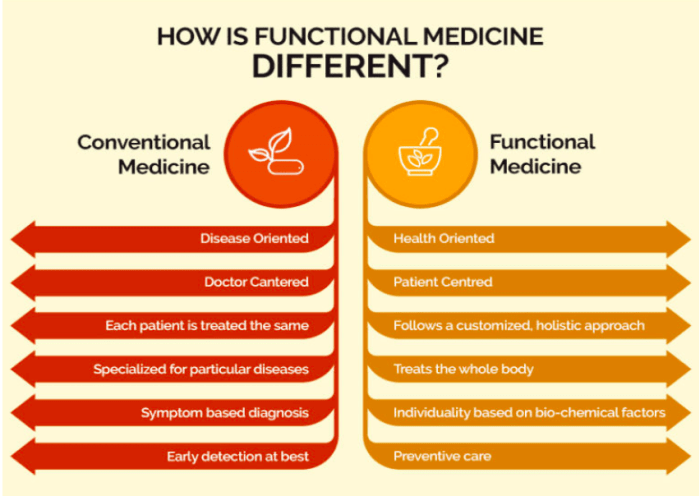
When comparing patient outcomes and long-term health benefits between functional medicine and traditional healthcare, it is essential to consider the different approaches and philosophies guiding each model. Functional medicine emphasizes personalized treatment plans that address the root cause of health issues, while traditional healthcare often focuses on symptom management.Functional medicine practitioners often report improved patient outcomes due to the comprehensive approach taken towards each individual's health.
By addressing underlying imbalances and promoting overall wellness, patients may experience better long-term health benefits compared to simply treating symptoms. This preventive care aspect of functional medicine can lead to a reduction in chronic conditions and an overall improvement in quality of life.
Focus on Preventive Care and Long-Term Health Benefits
In functional medicine, there is a strong emphasis on preventive care and lifestyle modifications to promote long-term health benefits. By empowering patients to take control of their health through dietary changes, stress management techniques, and other lifestyle adjustments, functional medicine aims to prevent chronic conditions from developing or worsening.
This proactive approach can lead to better overall health outcomes and reduced healthcare costs in the long run.
- Functional medicine focuses on identifying and addressing the underlying causes of chronic conditions such as autoimmune disorders, digestive issues, and hormonal imbalances.
- By promoting healthy habits and preventing disease progression, functional medicine practitioners aim to improve patient outcomes and enhance quality of life.
- Patient education and involvement are crucial in functional medicine, as individuals are encouraged to actively participate in their treatment plans and make informed decisions about their health.
Impact of Patient Involvement and Empowerment
Patient involvement and empowerment play a significant role in both functional medicine and traditional healthcare settings. However, functional medicine places a greater emphasis on educating patients about their health conditions and involving them in the decision-making process regarding their treatment plans.
This collaborative approach can lead to increased patient satisfaction, adherence to treatment protocols, and ultimately better health outcomes.
- Patients who feel empowered to make positive changes in their lifestyle are more likely to experience long-term health benefits and improved quality of life.
- In traditional healthcare, patients may receive standard treatments for their symptoms without addressing the underlying causes, which can lead to ongoing health issues and a reliance on medications.
- By actively engaging patients in their healthcare journey, functional medicine practitioners can help individuals achieve sustainable improvements in their health and well-being.
Wrap-Up
In conclusion, the comparison between Functional Medicine and Traditional Healthcare underscores the importance of personalized care, preventive strategies, and patient empowerment in achieving optimal health outcomes. By understanding the nuances of these two models, individuals can make informed decisions about their healthcare journeys.
Question & Answer Hub
What is the main difference between Functional Medicine and Traditional Healthcare?
The primary distinction lies in Functional Medicine's focus on addressing root causes of illness, whereas Traditional Healthcare often concentrates on managing symptoms.
How does Functional Medicine approach patient care differently from Traditional Healthcare?
Functional Medicine emphasizes personalized treatment plans tailored to individual needs, while Traditional Healthcare may follow more standardized protocols.
Are alternative therapies integrated into Functional Medicine but not in Traditional Healthcare?
Yes, Functional Medicine often incorporates alternative therapies such as acupuncture and herbal medicine, which are not commonly used in Traditional Healthcare.

