

As Best telehealth platforms for global users takes center stage, this guide invites readers into a world of telehealth solutions that transcend boundaries. From features to security measures, this overview explores the landscape of telehealth platforms designed to cater to a diverse global audience.
Delving into the intricacies of user-friendly interfaces, security protocols, and wearable device integration, this guide sheds light on the best practices and considerations for utilizing telehealth platforms on a global scale.
Research on Telehealth Platforms
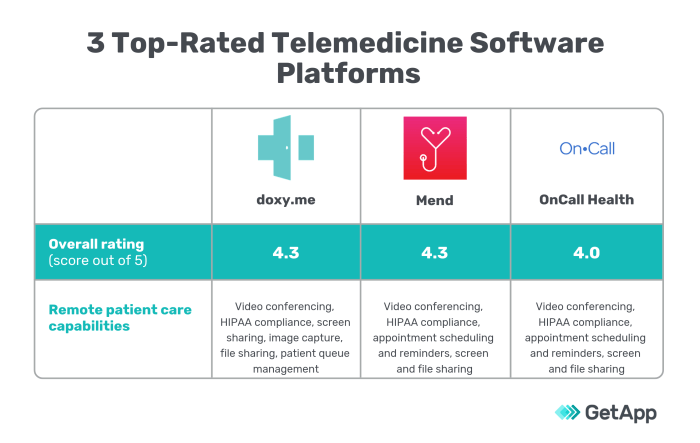
Telehealth platforms have become increasingly popular globally, offering convenient and accessible healthcare services to users. In this research, we will identify the top telehealth platforms available worldwide, compare their features, pricing, and user reviews, and discuss the pros and cons of each platform for users in different countries.
Top Telehealth Platforms
- 1. Teladoc: Teladoc is a leading telehealth platform known for its wide range of services and 24/7 availability. Users can access virtual consultations with healthcare providers and receive prescriptions online.
- 2. Amwell: Amwell offers video visits with doctors, therapists, and specialists, as well as urgent care services. The platform is user-friendly and provides personalized care options.
- 3. Doctor on Demand: Doctor on Demand allows users to consult with board-certified physicians, psychiatrists, and psychologists through video visits. The platform also offers behavioral health services.
Comparison of Features, Pricing, and User Reviews
- Features: Teladoc stands out for its comprehensive services, while Amwell is praised for its user-friendly interface. Doctor on Demand is known for its behavioral health offerings.
- Pricing: Teladoc and Doctor on Demand have competitive pricing models, with Amwell offering affordable options for virtual visits.
- User Reviews: Teladoc receives positive feedback for its quality of care and convenience. Amwell is praised for its responsive customer support, while Doctor on Demand is appreciated for its mental health services.
Pros and Cons for Users in Various Countries
- Pros: Telehealth platforms provide quick access to healthcare professionals, especially in remote areas. They offer a convenient way to seek medical advice without the need for in-person visits.
- Cons: Some users may face challenges with internet connectivity or language barriers when using telehealth platforms. Privacy and security concerns are also important considerations for users in different countries.
User-Friendly Interface
Creating an ideal user interface for a telehealth platform catering to a global audience is crucial for ensuring accessibility and ease of use for users from diverse cultural backgrounds. A user-friendly interface should be intuitive, visually appealing, and designed with the needs of different users in mind.
Importance of Multilingual Support
Providing multilingual support on telehealth platforms is essential for breaking down language barriers and ensuring that users can access healthcare services in their preferred language. This feature enhances communication between healthcare providers and patients, leading to better health outcomes and patient satisfaction.
- Telehealth platforms with multilingual support enable users to navigate the platform, schedule appointments, and communicate with healthcare providers in their native language.
- By offering language options, telehealth platforms can reach a broader audience and cater to the needs of global users who may not be proficient in the platform's default language.
- Having multilingual support can also help build trust and rapport between healthcare providers and patients, as it shows a commitment to inclusivity and cultural sensitivity.
Examples of Intuitive Telehealth Platforms
Several telehealth platforms have excelled in providing user-friendly interfaces that cater well to users from diverse cultural backgrounds. Examples include:
1. Teladoc
Teladoc offers a simple and intuitive interface that allows users to easily schedule appointments, access medical records, and communicate with healthcare providers. The platform also provides multilingual support to accommodate users who prefer to communicate in languages other than English
.
2. 98point6
98point6 features a user-friendly chat-based interface that simplifies the telehealth experience for users. The platform supports multiple languages, making it accessible to a wide range of global users.
3. Maple
Maple's telehealth platform is known for its user-friendly design and seamless user experience. The platform offers multilingual support, ensuring that users can receive care in their preferred language.
Security and Privacy Measures
In the realm of telehealth, security and privacy are paramount for ensuring the safety and confidentiality of patient information. Let's delve into the security features offered by leading telehealth platforms and discuss best practices for maintaining patient privacy in a global telehealth setting.:When it comes to telehealth platforms, robust security measures are essential to protect sensitive patient data from cyber threats.
End-to-end encryption plays a crucial role in safeguarding communication between healthcare providers and patients. This encryption method ensures that data is encrypted at the sender's end and can only be decrypted by the intended recipient, preventing unauthorized access to confidential information.
Importance of End-to-End Encryption
End-to-end encryption is a key security feature that ensures the confidentiality and integrity of data exchanged during telehealth consultations. By encrypting data at the source and decrypting it only at the destination, this method prevents unauthorized access to sensitive information.
This not only protects patient privacy but also helps in maintaining trust between healthcare providers and patients.
Best Practices for Maintaining Patient Privacy
- Implement strict access controls: Limit access to patient data to authorized personnel only, ensuring that sensitive information is not compromised.
- Regularly update security protocols: Stay up-to-date with the latest security measures and software updates to protect against emerging threats.
- Secure data storage: Utilize secure servers and data storage systems to safeguard patient information from breaches or cyber attacks.
- Train staff on privacy protocols: Educate healthcare providers and staff on the importance of patient privacy and the proper handling of confidential data.
- Obtain patient consent: Ensure that patients are informed about how their data will be used and obtain their consent before sharing any information.
Integration with Wearable Devices
Wearable devices have revolutionized the way we monitor our health and fitness, and their integration with telehealth platforms has opened up new possibilities for remote healthcare services. By seamlessly connecting wearable devices to telehealth platforms, users can easily track their health data and share it with healthcare providers for better monitoring and management of their conditions.
Examples of Telehealth Platforms Utilizing Data from Wearable Devices
- One example of a telehealth platform effectively utilizing data from wearable devices is Teladoc. Teladoc allows users to sync their wearable devices, such as fitness trackers or smartwatches, to the platform to provide real-time health data to healthcare providers.
- Another example is Amwell, which integrates with popular wearable devices like Apple Watch and Fitbit to track vital signs, activity levels, and other important health metrics for remote monitoring.
Impact of Wearable Device Integration on Healthcare Outcomes
Wearable device integration plays a crucial role in improving healthcare outcomes for global users by enabling continuous monitoring and early detection of health issues. By tracking vital signs, activity levels, and other health metrics through wearable devices, healthcare providers can provide personalized care plans and interventions to manage chronic conditions and prevent potential health complications.
Closing Summary
In conclusion, the realm of telehealth platforms for global users is vast and dynamic, offering innovative solutions for healthcare accessibility worldwide. By understanding the key aspects discussed in this guide, users can navigate the diverse options available and make informed decisions for their telehealth needs.
FAQ Overview
Are telehealth platforms secure for global users?
Yes, leading telehealth platforms implement robust security measures such as end-to-end encryption to safeguard user data and ensure privacy.
Do telehealth platforms offer multilingual support?
Many telehealth platforms provide multilingual support to cater to users from diverse linguistic backgrounds, enhancing accessibility and user experience.
How do wearable devices integrate with telehealth platforms?
Wearable devices can seamlessly integrate with telehealth platforms to enable remote monitoring and enhance healthcare outcomes for global users.

